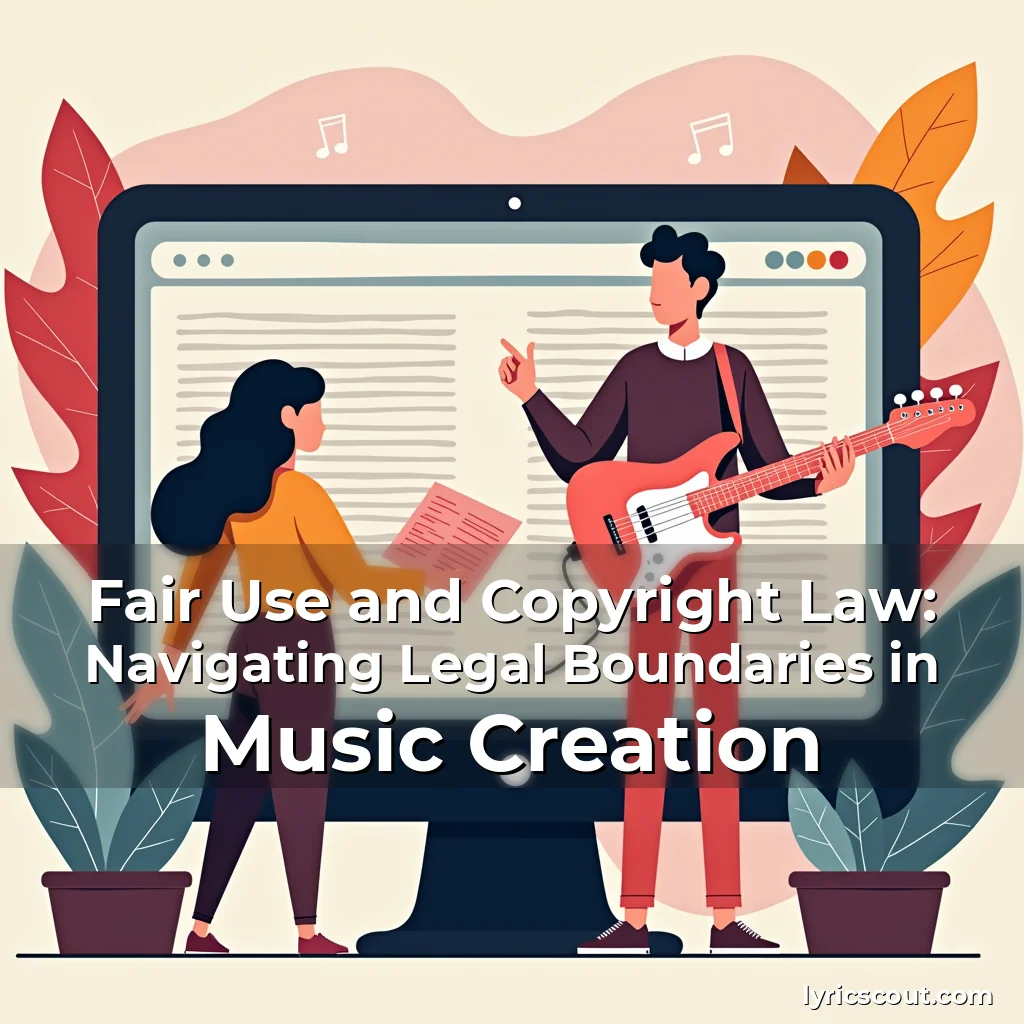
Fair Use and Copyright Law: Navigating Legal Boundaries in Music Creation
In an era where music is both art and asset, understanding the nuances of copyright law becomes essential for creators, fans, and legal professionals alike. This guide explores how fair use principles apply specifically within the context of musical works, focusing on the rights and responsibilities that come with borrowing elements from existing songs.
The digital age has transformed how we consume, share, and create music. As platforms like Lyricscout facilitate access to song lyrics and related content, clarity around what constitutes legally permissible usage under fair use becomes increasingly vital for users navigating these spaces responsibly.
Understanding Fair Use Principles in Music
Fair use is not a blanket permission but rather a set of criteria used by courts to determine whether limited use of copyrighted material without permission is allowed. In the realm of music, this can involve sampling, quoting lyrics, or referencing melodies.
The doctrine allows for transformative uses of copyrighted work—those that add new expression, meaning, or message. For instance, remixing a popular track might qualify as fair use if it introduces significant creative reinterpretation.
- Transformative nature: Courts often prioritize works that offer fresh perspectives over mere replication.
- Amount used: The quantity of borrowed material significantly influences the fairness assessment.
- Purpose and effect: Non-commercial educational purposes typically receive more leniency than commercial endeavors.
Evaluating Musical Borrowings Under Fair Use
Determining whether a particular use qualifies as fair requires careful analysis across four key factors outlined by U.S. copyright law. These include the purpose and character of the use, the nature of the original work, the amount used relative to the whole, and the potential market impact.
For example, a musician who samples a few seconds of a famous melody for a parody may find stronger support for their case compared to someone using substantial portions verbatim for identical purposes.
Case Studies Illuminating Fair Use Decisions
Historically, landmark cases such as Campbell v. Acuff-Rose Music have shaped current interpretations of fair use in music. In this pivotal Supreme Court decision, the use of Roy Orbison’s “Oh, Pretty Woman” in 2 Live Crew’s parody was deemed lawful due to its transformative intent.
More recent rulings continue to refine these boundaries. A 2021 appellate court decision involving a DJ’s mashup highlighted how technological advancements complicate traditional notions of infringement while reinforcing the importance of transformative elements.
Creative Liberties Within Legal Frameworks
Artists often walk a fine line between inspiration and infringement when incorporating existing musical elements into their compositions. Recognizing this balance helps prevent unintentional violations while encouraging artistic innovation.
Proper attribution remains crucial even when a use falls within fair use parameters. Crediting source material maintains ethical standards and respects the intellectual property rights of original creators.
Licensing Alternatives to Fair Use
While fair use offers certain freedoms, many musicians opt for direct licensing agreements instead. These formal arrangements provide clear permissions and often allow greater flexibility regarding the scope of use.
Clearance processes vary depending on the type of right sought—whether mechanical licenses for recordings, synchronization rights for visual media integration, or master use licenses for sampled sounds.
Cost Considerations for Licensing
Licensing fees can range widely based on factors including the popularity of the referenced material, the intended distribution channels, and negotiated terms. Independent artists may face higher costs when seeking clearance for well-known tracks.
Sometimes, negotiating lower rates through intermediaries or leveraging collective management organizations provides cost-effective solutions for securing necessary permissions.
Navigating Digital Platforms and Fair Use
Platforms like Spotify, YouTube, and TikTok employ automated systems designed to detect unauthorized usages of protected content. Understanding how these mechanisms operate helps users avoid inadvertent policy breaches.
Content ID tools utilized by services like YouTube enable rights holders to identify matches and choose actions ranging from monetization to takedown requests. Familiarity with these features aids creators in managing potential conflicts proactively.
Risks and Consequences of Unauthorized Usage
Unauthorized use of copyrighted music can lead to serious repercussions—including financial penalties, legal action, or removal of content from public platforms. Artists should be aware of these risks before incorporating any pre-existing materials into their projects.
Even if a claimant does not pursue litigation initially, repeated infractions could result in escalated consequences later. Proactive compliance minimizes exposure to liability while protecting creative reputations.
Best Practices for Ethical Content Utilization
Maintaining transparency regarding sources enhances credibility among audiences and fellow creatives. Documenting references ensures accountability during creation phases and facilitates appropriate credit-giving post-publication.
When uncertainty arises about legality, consulting qualified legal counsel provides definitive guidance tailored to individual circumstances. Professional advice helps navigate complex jurisdiction-specific regulations effectively.
Conclusion
This exploration underscores the intricate relationship between creativity and copyright law in modern music production environments. Balancing respect for original authors’ rights with opportunities for innovative expression defines responsible engagement within this field.
By embracing awareness of fair use doctrines alongside practical strategies for obtaining proper permissions, members of the Lyricscout community can contribute positively toward fostering both artistic freedom and legal integrity in shared musical landscapes.